
How does Social Media transform Public Sphere in China:
A Case
Study of the Controversial Female Comedian Yang Li

1. Introduction
The emergence of social media has greatly contributed to the transformation of the public sphere. (Shao &Wang, 2016) According to the 2020 Internet development report of CNNIC, the number of Chinese netizens has reached 989 million with 511 million monthly active users on Weibo. This volume of participation helps it occupy a vital position in the process of democratization in contemporary China, and it is also the main battlefield where the controversies over the female comedian-Yang Li occur and fermented. Her jokes featured with feminism on TV stand-up comedy contest Rock & Roast triggered an extensive discussion on social media and makes it a typical case for the observation of the transformed Chinese public sphere. Under a theoretical framework of the public sphere theory and adoption of the concept “counterpublics”, this paper will have a close examination of the case of Yang Li with a discussion of the relevant affordances of Weibo, therefore, to argue that social media contributes to the rise of counterpublics in China with a limitation.
2. Background Discussion of Relevant Theories
According to Jugen Habermas (1964), the public sphere refers to the realm where public discourses are created for the benefit of the whole society, and a set of normative criteria has been listed for the construction of an idealized public sphere by Habermas(Dahlberg, 2001):
1. Independence. The public discourses, which are organized by private individuals, should be independent from political or commercial factors;
2. Rationality. The public opinions deliberated by citizens should be supported by rational arguments and critical thinking;
3. Sincerity. Citizens engage with each other should have a holistic knowledge about the issue being discussed with a consideration of their own interests;
4. Discursive inclusion and equality. Every citizen possesses the same right to participate in this deliberation;
These requirements concluded by Dahlberg have served as a significant assessment tool for the emergent networked public sphere by many other scholars, and these criteria are also fundamental scaffolding for the evaluation of the Chinese networked public sphere discussed in this paper.
One prominent limitation of Habermas’s theory of the public sphere identified by scholars like Fraser (1990) is exclusion. In her influential paper “Rethinking the Public Sphere: A Contribution to the Critique of Actually Existing Democracy”, she argues that the official public sphere is constituted on the basis of an exclusion of minority groups like women and the working class. In response to this gap, Fraser (1990) introduces a concept - Subaltern counterpublics, which refers to “discursive arenas in parallel to the traditional defined public sphere” (Kampourakis, 2016) and “where members of subordinated social groups invent and circulate counter discourses to formulate oppositional interpretations of their identities, interests, and needs.” (Fraser, 1990, p123) Specific to the case of Yang Li, we are able to examine how public discourses of feminist counterpublics are amplified by social media and function as “antagonistic politics” (Kampourakis, 2016) with dominant publics by widening the field of discursive contestation, bringing the appeals of females to the spotlight.
According to Danah Boyd (2011), the statement “code is law” has been widely accepted in the academic world, which means that the technological design of a significant social media platform can define the possible way of public discursive interaction, or we can say that social media is biased with a preference of certain type of public discourses. (Lim, 2013) Therefore, a discussion of affordances becomes a necessity for the further discussion of the Chinese public sphere.
Specific to the social media platform- Weibo, there are four affordances that worth mentioning. Replicability together with scalability (Boyd, 2011) constitutes the viruses-like spreading model on Weibo. With a list of “The Most Searched Hashtags” on the page of “Discover”, Weibo can expand the outreach of certain content with a higher exposure rate by encouraging users to use hashtags to engage with the online public sphere and deliberate public opinions. According to my observation, usually, there are lots of duplicated versions of the original content under that hashtag created by Weibo users with different intentions. Searchability (Boyd, 2011) and association (Treem and Leonardi, 2012) guarantee easy access and prevalent engagement of the topic. With a simple click of the hashtag, netizens can easily get to the discussion page, skim through relevant content and write their own posts. Users can also click “+” to follow this topic for further participation. The function of “forward”, “like” and “@(user name)”enables users to have an easy and quick association with both other users and the content, which could “support social connection” (Treem, Leonardi. 2012). These affordances of Weibo all reveals its “participatory nature” (Lim, 2013), which matches well with popular culture-related content. This is also one pivotal reason why Yang Li’s punchlines could stimulate so many discussions on Weibo - because it “embraces the principles of the contemporary culture of consumption ” (Lim, 2013).
3. Case Study of the Controversies over the Female Comedian Yang Li
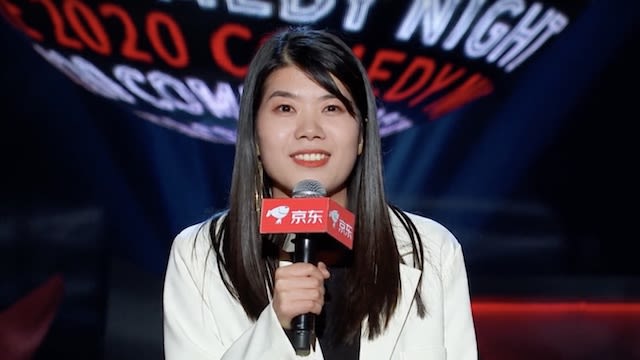
Before August 2020, the female Comedian Yang Li, who always “tackle controversial gender issues” (Yang, 2020) in her humorous performance, is only recognized as a candidate of an online stand-up comedy contest Rock& Roast. But after an update of the latest episode of Rock& Roast on August 19th, 2020, Yang Li was pushed forward to the spotlight of the public overnight. The clips of her performance which contain her famous punchline- “How can men be so ordinary, yet so full of themselves?” went viral on Weibo, and soon climbed onto the list of most searched hashtags. This simple sentence received both great empathetic recognition from female social media users and backlash from males with an accusation of anti-men and provoking “antagonism between men and women”. (Yang, 2020) With continuous exposure of Yang Li’s jokes about problematic men, the public sphere on Weibo gets extremely contentious when it comes to gender issues and reached an unprecedented level when Yang Li lost her commercial promotional cooperation with Intel and P&G due to the complaints and reports of some netizens. What is worth mentioning is that, a hashtag activity (# I am Man and I support Yang Li#) initiated by a Chinese rapper called Xia Zhiyu to support feminism as a man was soon banned by Weibo with an excuse of violating certain laws and regulations during this process.
The complexity of the issue itself and the extensiveness of the discussion and controversies over Yang Li on Weibo makes it a typical case for the analysis of the relationship between social media and the Chinese public sphere. In this paper, I will try to use this empirical case to answer the question: How does social media affect the public sphere in the Chinese context?
The emergence of social media contributes to the rise of feminist counterpublics in China. According to Qin (2019), the dominant public sphere before the age of social media is characterized by de-genderized discourses. As the microphone is held by the official mouthpiece of the government, when approaching public issues, the dominant voice would first reflect the need of social ideology, emphasizing the publicity of the agenda. Using the keyword “Yang Li” to check those official news media influencers with more than 20 million followers on Weibo. The figure of related news reports is ranging from 0 to 3, and none of those reports speaks from the perspective of females.
Within those limited reports, the dominant voice is about proper commercial marketing for brand or criticism towards generating gender antagonism, and the feminist perspective is overlooked by those representatives of traditional public sphere. According to the 2020 development report of Weibo, 60% of its users are females, which makes the transition of social discourse power possible. With a lower threshold for public deliberation, females are able to reconstruct their social representations and rise their voice to counter the official public sphere. At 21:40, 19th, 2020, using the hashtag (#YangLiSpitOnMenWith Blind-confidence), an influencer in the entertainment sector with more than 10 million followers uploaded a clip of Yang Li’s jokes on Rock&Roast and soon accumulated 4 million views. Several factors contribute to this scale of widespread dissemination.
First, the affordance design of “re-post” and “@ (users)” enables quick and easy association between users and contents, which contribute to the explosive increase of the invisibility of this post. In the re-post sector, many users expressed their strong empathetic feeling towards problematic men with blind confidence, and many of them used “@” to invite their friends to view this video too. Besides, by clicking the hashtag, many users participated in this discussion, sharing their chatting records with this kind of man, delivering opinions towards this topic, imitating or creating related memes in the form of texts, pictures or tags. With more and more participation, this hashtag soon rushed to the list of most searched hashtag on Weibo, and the visibility of this content was further amplified and received two hundred million pageviews and 8.3 million discussions. It is fair to say that it is the affordances of Weibo that enables this scale of discussion from an utterly female perspective possible.
Another factor contributes to this volume of discussion is the memetic form of transmission, which is highly consistent with pop culture. As we discussed above, the design of Weibo makes it the “most suitable platform to disseminate pop-culture related content” (Lim, 2013), and memes, as a production of the Internet, works effectively in this case. The punchline “How can men be so ordinary, yet so full of themselves?” is definitely the most famous meme in 2020, which has been shared, imitated and altered by many users as a way to satirize those problematic men. This humorous way of pinpointing the self-superior recognition of men is a harmless ironic complaints from the perspective of females, which I think effectively changed the public discourse once dominated by males, and challenged hegemonic positions (Brantner, Lobinger and Stehling, 2020) with its high participation and prevalent usage. This feminist meme propagation is a successful tryout for promoting feminist counterpublics on social media. When men are put at the position of being gazed at and criticized, it is easy for them to be provoked, that is the reason why Yang Li received such a strong backlash. But revealing the problem underlying this patriarchal society is definitely better than keeping silent.
We can also observe the limitation of social media in this case. Compared to the idealized version of public sphere of Habermas, there are lots of problems. Strong censorship of the platform; Instead of being a neutral platform of public discourse, Weibo has always had a cautious attitude towards any activity that can stimulate instability under the guidance of propaganda department of the government. Banning the topic (#IamManAndISupportYangLi) initiated by the Chinese rapper, Xia Zhiyu, can be a typical example. The reason why this activity, which only aims to show support of male towards feminism, was banned remains a myth of the criterion of censorship on Weibo.
Lack of rational discourses and sincerity; Among the 8.2 million discussions under the hashtag (#YangLi), there are lots of hate speech and irrational accusation, which resulted in a chaotic public sphere. Also, as many people lack a correct understanding of feminism and gender inequality, many of the discussions are ineffective, as they are not closely engaged. As argued by scholars like Lim (2013), the participatory nature of social media is inconsistent with serious civic engagement which can contribute to political activism. Whether this is a justified judgment needs further research and investigation. Also, due to the length of this paper, it is impossible to have a holistic discussion of every aspect of the public sphere that affected by social media. The implications of the limitations of social media we discussed above still need more detailed analysis.
4. Conclusion
In this paper, with an examination of the case of Yang Li, we are able to have a discussion about the relationship between the emergence of social media and the public sphere from the perspective of feminist counterpublics. Social media like Weibo contributes to the shift of discourse power in the public sphere by amplifying the voice from those people being neglected by the traditional public sphere with the affordances of searchability, replicability, scalability and association. On the way to achieve democratic development, there are also hindrances, as the interference of political censorship and irrationality, social media itself also has its own limitations in producing serious civic engagement.
References
Habermas, J. (1964). “The Public Sphere: An Encyclopedia Article.” Chapter 5 in M. G. Durham & D. Kellner (Eds.), Media and Cultural Studies: Key Works (pp. 73- 78). Hoboken, NJ: Wiley.
N. Fraser. (1990). “Rethinking the Public Sphere: A Contribution to the Critique of Actually Existing Democracy,” Social Text, no. 25/26, pp. 56–80, Jan.
Dahlberg, L. (2001) “The Internet and Democratic Discourse: Exploring The Prospects of Online Deliberative Forums Extending the Public Sphere”, Information, Communication & Society, (4), pp. 615–633.
Boyd, Danah. (2011). Social network sites as networked publics: affordances,
dynamics, and implications. In, Papacharissi, Zizi (ed.) A networked self: identity, community and culture on social network sites (pp.39-58). Routledge. ISBN: 978-0415801805.
Jeffrey W. Treem, Paul M. Leonardi. (2012). Social Media Use in Organizations: Exploring the Affordances of Visibility, Editability, Persistence, and Association. Communication Yearbook, 36
Lim, M. (2013). ‘Many clicks but little sticks: social media activism in Indonesia’, Journal of Contemporary Asia, 43(4), pp. 636–657.
 Built with Shorthand